temp stick alternative
A Temp Stick alternative for multi-site IT teams
Compare SensorWard and Temp Stick side by side. Keep Temp Stick if you want a subscription-free single sensor; choose SensorWard for $35-$41 open hardware, site outage grouping, PagerDuty, and press-1 voice escalation.
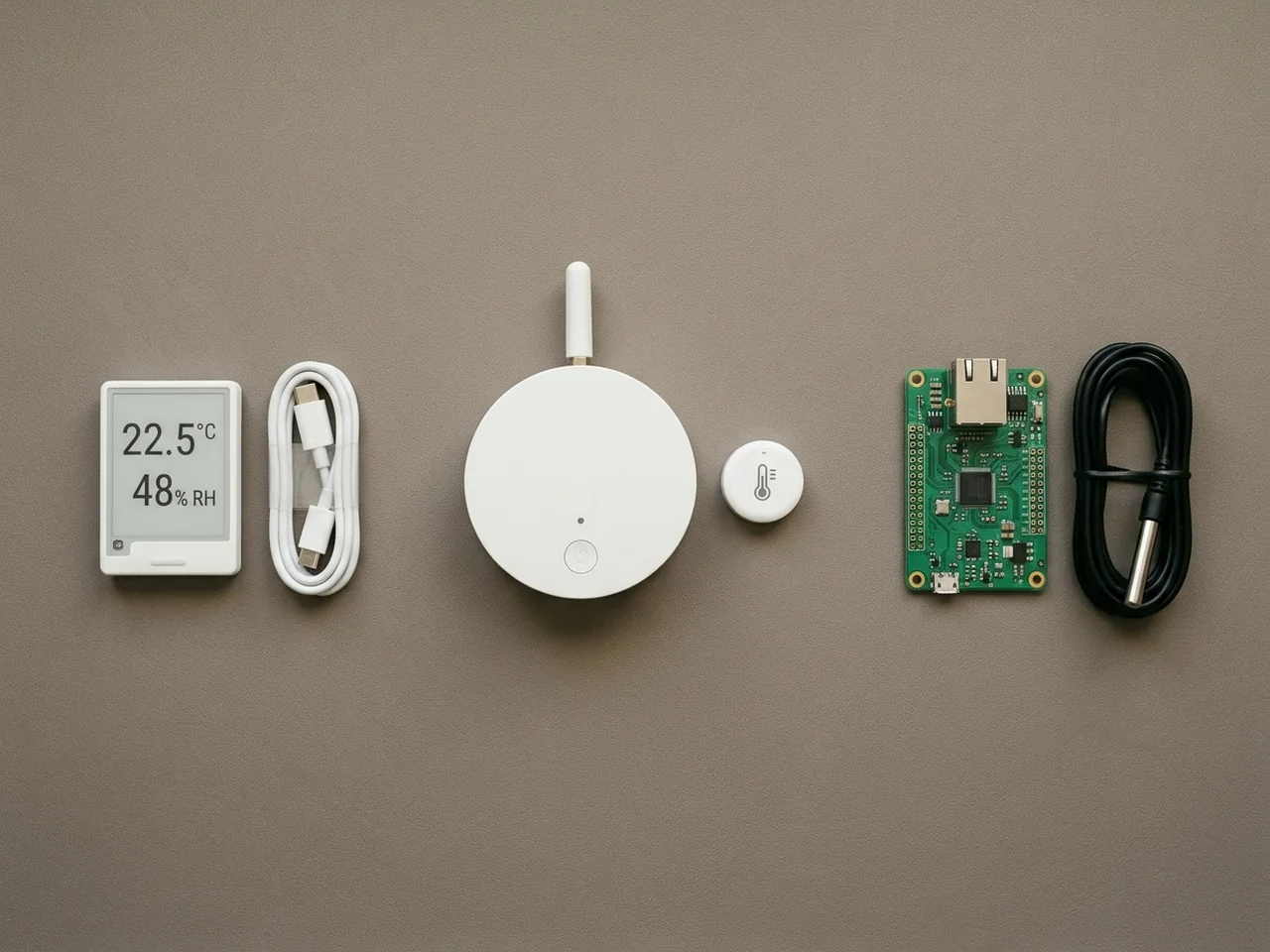
What you need (bill of materials)
Hardware is purchased directly from your preferred vendor during the BYOD pilot.
| Component | Specification | Reference price |
|---|---|---|
| Shelly H&T Gen3 (x10 closets) | $40.99 each vs ~$149 proprietary sensor | ~$410 USD total |
| SensorWard MSP Bundle | Up to 10 client sites / 100 sensors, voice + PagerDuty | $99/mo |
Setup in three steps
- Step 1
Order off-the-shelf Shelly H&T Gen3 (USB-C) or Olimex ESP32-POE-ISO boards directly from your preferred distributor.
- Step 2
Provision tenant and site IDs in SensorWard so multi-sensor site outages correlate automatically.
- Step 3
Connect PagerDuty Events v2 and verify Primary + Backup US/Canada on-call numbers.
# Same authenticated HTTPS ingest works across Shelly, Ruuvi, and ESP32
POST https://api.sensorward.com/v1/ingest/<sensorId>
Authorization: Bearer swt_your_sensor_token
Default thresholds and heartbeat profile
| Profile | Expected cadence | Offline deadline | Default thresholds |
|---|---|---|---|
| shelly-usb / ruuvi-gateway / esphome-poe | 1 to 5 min (wired / USB-C) | 10 to 15 min (2h 45m battery) | Per-sensor High/Low with hysteresis + 3m site grouping |
Side-by-side comparison
| Capability | SensorWard (BYOD) | AVTECH Room Alert | Temp Stick | SensorPush HT1 |
|---|---|---|---|---|
| Hardware approach | BYOD open sensors ($35-$41 Shelly or PoE ESP32) | Proprietary rack unit (Room Alert 3E / 12S, $225-$495+) | Proprietary Wi-Fi sensor (~$149/unit) | Proprietary BLE tag ($49) + Wi-Fi gateway ($99) |
| Software subscription | $6.99/mo Solo, $19/site/mo Business, $99/mo MSP | Paid cloud tier after entry allowance | No monthly fee for standard cloud alerts (vendor advantage) | No monthly fee for basic cloud alerts (vendor advantage) |
| Verified voice call + press-1 ACK | Included (US/CA +1 OTP, Backup escalation, max 3 calls) | SMS / email; voice via external paging stack | Email & SMS text alerts (no press-1 voice escalation) | App push & email (no native voice call escalation) |
| Multi-sensor site outage grouping | 3-minute site lookback suppresses call storms on 3rd+ sensor | Per-device alerts (enterprise rules via Account tier) | Per-sensor offline alert | Per-gateway / per-sensor offline push |
| Local SNMP / zero-setup battery life | HTTPS push only (no native SNMP polling yet) | Native local SNMP + embedded web UI (vendor advantage) | Simple battery Wi-Fi setup out of the box | 1-2 year HT1 coin-cell battery life (vendor advantage) |
| PagerDuty Events v2 & webhooks | Native PagerDuty dedup_key + HTTPS/Slack webhooks | SNMP traps, webhooks on paid tiers | IFTTT / Zapier / API polling | REST API polling (requires custom script) |
Why standard setups fail
- Proprietary ~$149 sensors add up quickly across 10 to 50 MSP client closets.
- Single-sensor feeds spam on-call engineers when one site router drops.
- IT teams need PagerDuty Events v2 dedup keys, press-1 voice ACK, and open PoE hardware options.
Deployment limits
- Where Temp Stick wins: no recurring monthly subscription for standard email/SMS alerts, and simple battery-only setup out of the box.
- SensorWard requires a monthly software plan ($6.99 Solo, $19/site Business, $99 MSP) to fund verified Twilio voice calls, Durable Object heartbeats, and multi-site ops tooling.
Frequently asked questions
When is Temp Stick a better fit than SensorWard?
If you only need one battery-powered sensor in a vacation home and want zero monthly fees with standard email/SMS alerts, Temp Stick is simpler.
Does SensorWard lock me into one sensor brand?
No. You can mix Shelly H&T Gen3, Ruuvi Gateway, and ESP32 PoE probes inside the same site and tenant.
Ready to test this setup?
Try the simulated outage and press-1 phone escalation or apply for the BYOD pilot.