Solo / Homelab $1.40 / sensor
$6.99/mo
or $59/yr · Up to 5 sensors
- Verified US/Canada voice call + Press-1 ACK
- Power-profile offline heartbeat (10m / 15m / 2h 45m)
- Shelly Gen3, Ruuvi Gateway & ESP32 HTTPS ingest
- HTTPS / Slack webhook notifications
SensorWard watches the temperature sensors you already own. If a room gets too hot or goes quiet, it calls your phone.
SensorWard Alert: Main Office (HQ)
MDF Rack A Intake reached 91.2°F (limit 82.4°F). Press 1 to acknowledge.
Buy sensors directly from your distributor. SensorWard tracks each device's real reporting cadence and offline deadline over authenticated HTTPS. Hardware sold separately.
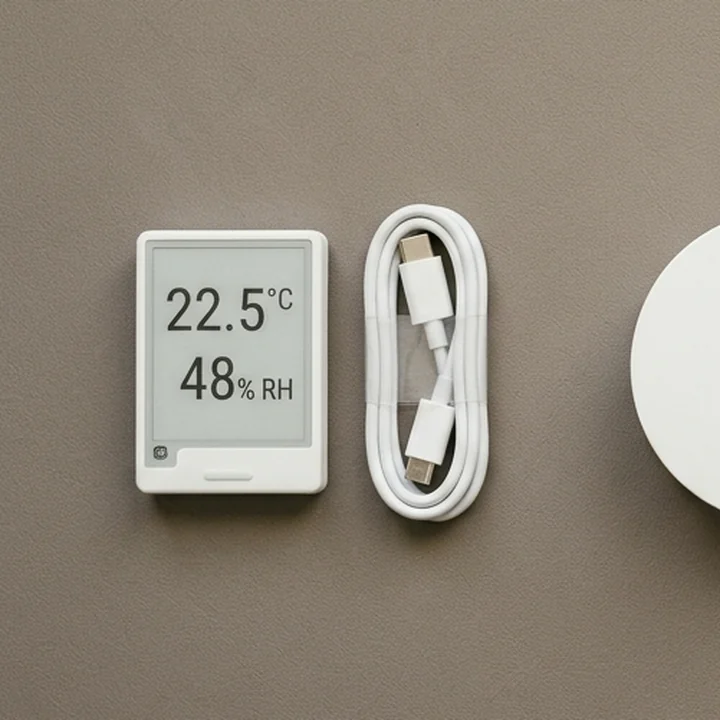
USD list price (USB-C cable/adapter or 4x AA batteries sold separately)
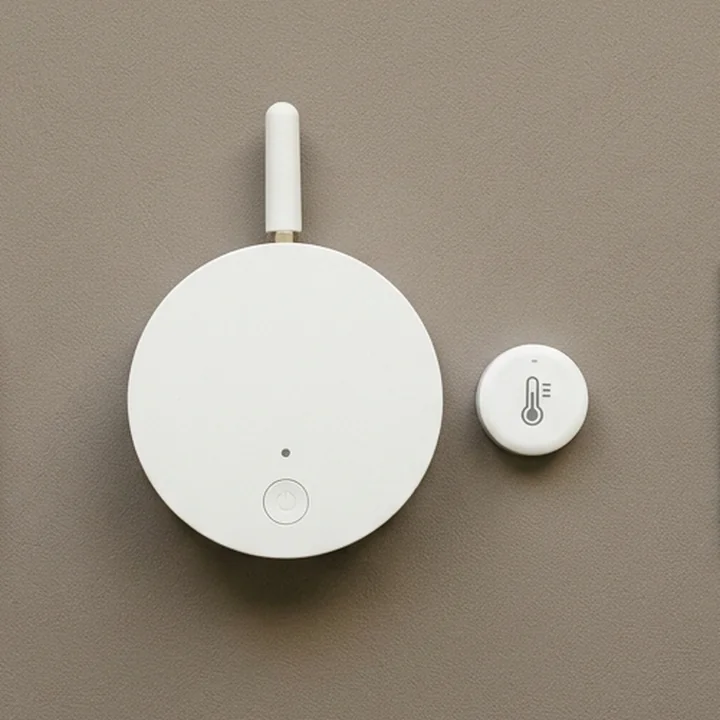
Gateway list price (RuuviTag sensors sold separately, ~EUR 39 each)
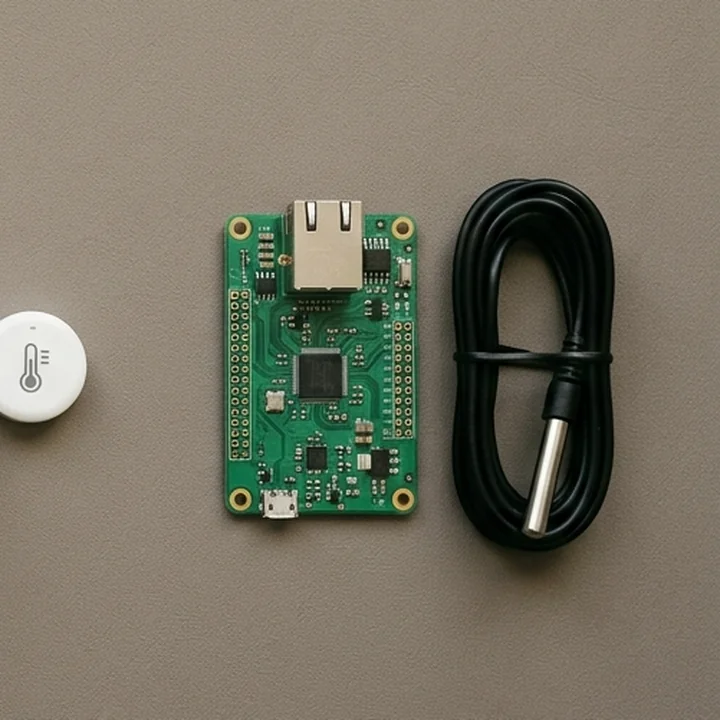
Olimex ESP32-POE-ISO + waterproof DS18B20 probe (enclosure & Cat6 separate)
Example sequence for USB-C Shelly H&T Gen3 sensors with a 15-minute offline timeout, 3-minute site lookback, and 5-minute backup delay.
USB-C sensors check in about every 5 minutes. Server clock arms a 15-minute dead-man timer per Durable Object.
No report for 15 minutes. Marked Offline (hatched gray, never confused with overheating). Webhook, PagerDuty, and Primary On-Call fire.
Peer sensors at the same site going quiet within 3 minutes correlate into one site incident. The 3rd and later sensors do not place separate calls.
Still unacknowledged after 5 minutes. SensorWard calls your verified Backup On-Call number (if configured).
Press 1 on the call or click Acknowledge in the console to halt escalation. Capped at 3 voice calls per incident, retries included.
SensorWard Incident Summary (EXAMPLE)
Site: Westside Branch (branch-west)
Scope: 5 sensors stopped reporting within 3 minutes
Timeline: 02:00 AM last report -> 02:15 AM first overdue -> 02:18 AM site grouped
Calls placed: 2 of 3 max (Primary at 02:15 AM, Backup at 02:20 AM)
Status: Acknowledged via Press 1 (twilio-dtmf) at 02:21 AM
Including the areas where incumbent hardware wins, so you can pick the right tool for your site.
| Capability | SensorWard (BYOD) | AVTECH Room Alert | Temp Stick | SensorPush HT1 |
|---|---|---|---|---|
| Hardware approach | BYOD open sensors ($35-$41 Shelly or PoE ESP32) | Proprietary rack unit (Room Alert 3E / 12S, $225-$495+) | Proprietary Wi-Fi sensor (~$149/unit) | Proprietary BLE tag ($49) + Wi-Fi gateway ($99) |
| Software subscription | $6.99/mo Solo, $19/site/mo Business, $99/mo MSP | Paid cloud tier after entry allowance | No monthly fee for standard cloud alerts (vendor advantage) | No monthly fee for basic cloud alerts (vendor advantage) |
| Verified voice call + press-1 ACK | Included (US/CA +1 OTP, Backup escalation, max 3 calls) | SMS / email; voice via external paging stack | Email & SMS text alerts (no press-1 voice escalation) | App push & email (no native voice call escalation) |
| Multi-sensor site outage grouping | 3-minute site lookback suppresses call storms on 3rd+ sensor | Per-device alerts (enterprise rules via Account tier) | Per-sensor offline alert | Per-gateway / per-sensor offline push |
| Local SNMP / zero-setup battery life | HTTPS push only (no native SNMP polling yet) | Native local SNMP + embedded web UI (vendor advantage) | Simple battery Wi-Fi setup out of the box | 1-2 year HT1 coin-cell battery life (vendor advantage) |
| PagerDuty Events v2 & webhooks | Native PagerDuty dedup_key + HTTPS/Slack webhooks | SNMP traps, webhooks on paid tiers | IFTTT / Zapier / API polling | REST API polling (requires custom script) |
What SensorWard does today, what it intentionally does not do, and how to plan resilient monitoring at critical sites.
BYOD pilot
No credit card required to apply during the initial pilot. Pick the tier that matches your sensor count and site layout.
$6.99/mo
or $59/yr · Up to 5 sensors
$19/site/mo
Up to 20 sensors per site
$99/mo
Up to 10 client sites (100 sensors)
Bills of materials, verified webhook setup steps, and realistic operating boundaries for each environment.
Connect a Shelly H&T Gen3 on USB-C or an ESP32 PoE probe at rack intake height. Get verified US/Canada voice calls, press-1 acknowledgment, PagerDuty webhooks, and site-grouped offline detection.
Read the guideBuilt for how Shelly H&T Gen3 actually reports: 15-minute offline defaults on USB-C (~5m check-ins) and 2h 45m defaults on battery (~2h heartbeat) so you stop getting false offline calls.
Read the guidePlug an isolated Olimex ESP32-POE-ISO with a waterproof DS18B20 probe into any PoE switch port. No 2.4GHz guest Wi-Fi, no dead batteries, and 10-minute dead-man offline detection.
Read the guideKeep the Ethernet or Wi-Fi transmitter outside the metal cabinet and route a waterproof DS18B20 probe inside beside a thermal buffer bottle to prevent defrost-cycle false alarms.
Read the guideCompare SensorWard and Temp Stick side by side. Keep Temp Stick if you want a subscription-free single sensor; choose SensorWard for $35-$41 open hardware, site outage grouping, PagerDuty, and press-1 voice escalation.
Read the guideChoose SensorPush if you want 1-2 year coin-cell battery life with zero monthly fee. Choose SensorWard when you need open gateways (Ruuvi), direct Wi-Fi/PoE probes, PagerDuty, and verified press-1 voice calls.
Read the guideAVTECH Room Alert is proven enterprise hardware, but $300 to $1,000+ per closet plus annual cloud tiers priced out small IT teams and multi-site MSPs. Use open $41 Shelly USB-C or PoE probes with press-1 voice escalation instead.
Read the guideA $15 Govee Bluetooth or Wi-Fi sensor is great for a guitar case or nursery, not a $30,000 server closet. Here are the three silent failure modes that burn IT teams and how open USB-C or PoE sensors solve them.
Read the guideMonnit ALTA shines for long-range 900MHz industrial RF across huge warehouses, but small IT closets and multi-site MSPs end up paying for proprietary gateways and annual iMonnit software renewals. SensorWard runs on open off-the-shelf hardware.
Read the guideBoth Shelly pucks look nearly identical on a shelf, but power mode matters far more than the badge on the box. Here is how Gen3 compares to Plus H&T and how to avoid the 2-hour battery sleep trap.
Read the guideWe are onboarding an initial group of IT admins and MSPs. No deposit or credit card required.