wifi freezer alarm
Freezer and walk-in cooler alarm with a wired probe
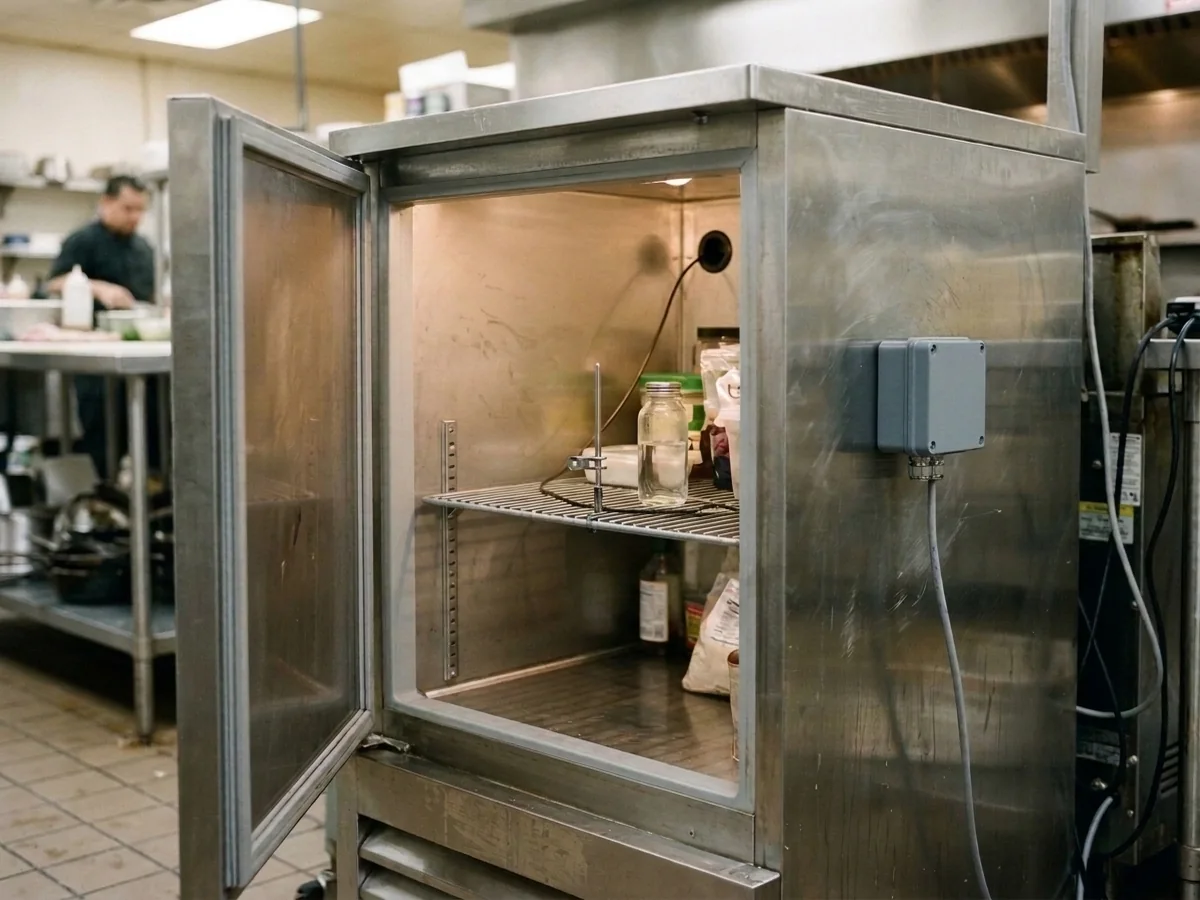
Keep the Ethernet or Wi-Fi transmitter outside the metal cabinet and route a waterproof DS18B20 probe inside beside a thermal buffer bottle to prevent defrost-cycle false alarms.
What you need (bill of materials)
Hardware is purchased directly from your preferred vendor during the BYOD pilot.
| Component | Specification | Reference price |
|---|---|---|
| Waterproof DS18B20 stainless probe | -55 to 125°C probe tip, thin insulated lead | $9.95 USD |
| ESP32 PoE or Wi-Fi board + exterior weatherproof box | Electronics stay outside cabinet at room temperature | ~$35 USD |
| Glycol / thermal buffer vial (recommended) | Smooths brief door openings and defrost air spikes | ~$8 USD |
Setup in three steps
- Step 1
Mount the enclosed ESP32 transmitter outside the cooler wall so Wi-Fi/Ethernet and electronics stay dry and warm.
- Step 2
Route the waterproof DS18B20 probe through an existing service grommet and place the tip in a thermal buffer bottle.
- Step 3
Set a 15-minute breach duration (900,000 ms) so normal defrost cycles do not wake the manager on duty.
# Configure custom freezer thresholds via SensorWard API
curl -X PUT https://api.sensorward.com/v1/sensors/sw_cs_freez02/config \
  -H "Authorization: Bearer <admin_token>" \
  -H "Content-Type: application/json" \
-d '{"highTempC": -12, "lowTempC": -26, "hysteresisC": 1.5, "breachDurationMs": 900000}' Default thresholds and heartbeat profile
| Profile | Expected cadence | Offline deadline | Default thresholds |
|---|---|---|---|
| esphome-poe (wired probe) | ~1 min wired report | 10 min dead-man deadline | Customizable per unit (e.g. Freezer High 10.4°F / -12°C, 15m debounce) |
Why standard setups fail
- Metal walk-in walls block Bluetooth and Wi-Fi signals when consumer pucks are placed inside.
- Air temperature spikes during normal defrost cycles cause 3 AM false alarms without time-based debounce.
- Silent overnight push notifications miss the manager on duty while inventory spoils.
Deployment limits
- Never place a Shelly H&T Gen3 puck inside a freezer or cooler; it is rated for 0 to 40°C rooms only.
- SensorWard is NOT a regulated vaccine, pharmacy, FDA 21 CFR Part 11, or VFC compliance logger and includes no NIST calibration certificates.
- Installing an ESP32 wired probe requires basic technical or IT/MSP setup; pre-flashed kits are not sold during the BYOD pilot.
Frequently asked questions
Can I use SensorWard for a pharmacy or VFC vaccine refrigerator?
No. SensorWard is informational environmental monitoring only and does not provide NIST-traceable calibration certificates or 21 CFR Part 11 regulatory audit trails.
How do I prevent defrost-cycle false alarms?
Pair a thermal buffer bottle (glycol or water vial for coolers) with a 10 to 20 minute breachDurationMs threshold so brief air defrost warmups never trigger a voice call.
Ready to test this setup?
Try the simulated outage and press-1 phone escalation or apply for the BYOD pilot.